
Emergency Tree Removal in Orland Park, IL: What Qualifies as a True Emergency?
Not every damaged or leaning tree calls for an urgent response, but some situations demand emergency tree removal before another hour passes. This guide covers what qualifies as a tree emergency, what Orland Park, IL, homeowners should do right after a storm, how to document damage for insurance, and when calling a 24/7 professional is the only safe move.
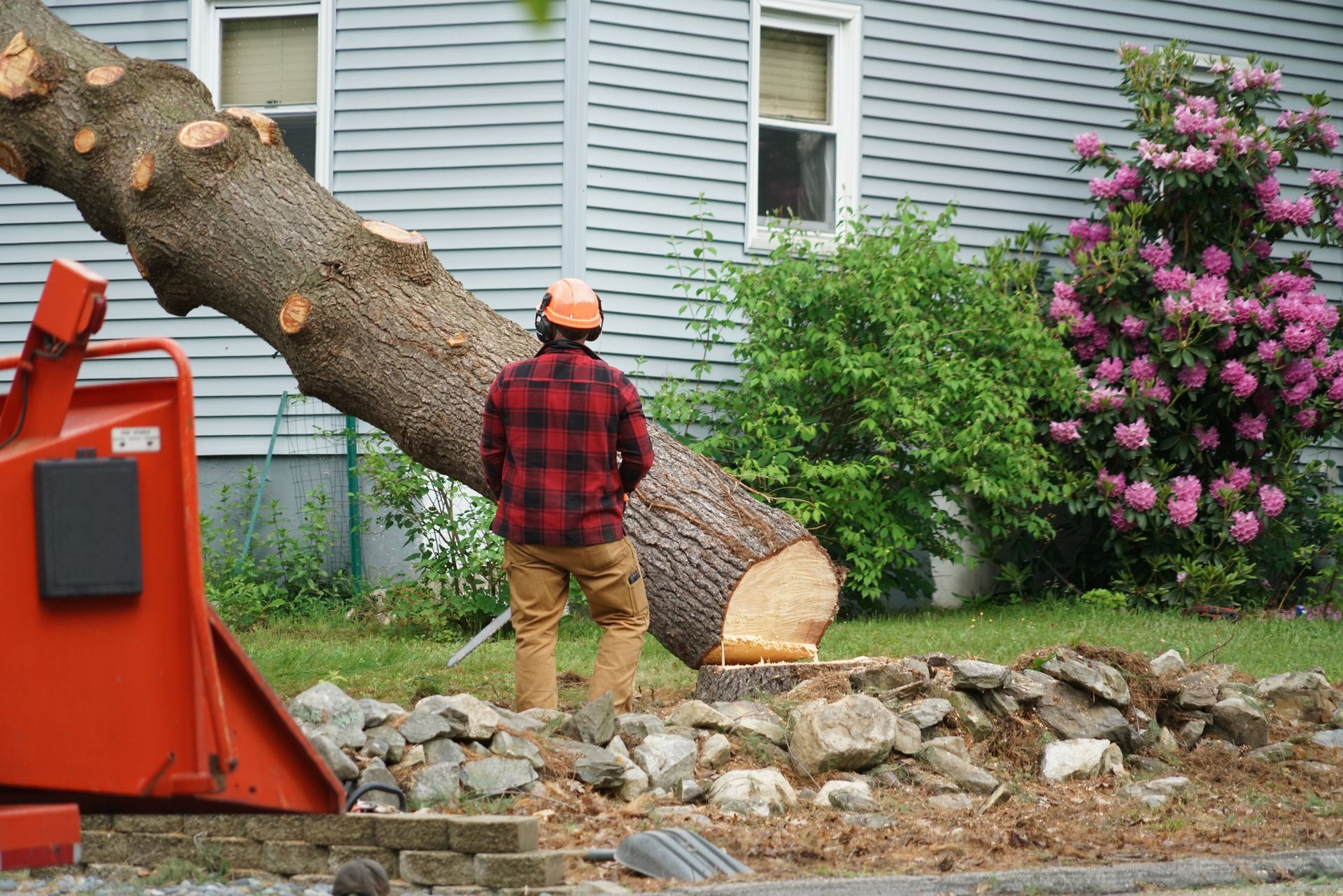
What Makes a Tree Situation a True Emergency?
A true tree emergency involves an immediate threat to people, structures, or utility lines. The scenarios below are those where waiting even a day can mean serious injury or much costlier damage.
Storm Damage and Fallen Trees
Orland Park sits in Cook County, and the southwest Chicago suburbs see severe thunderstorms, high straight-line winds, and heavy ice storms from late spring through early winter. When a storm drops a large tree or major limb onto a roof, vehicle, fence, or driveway, that is an emergency. The weight and tension stored in a partially fallen tree can shift without warning, making it far more dangerous than it looks from the ground.
Tree Contact With Power Lines
A tree or large branch resting on utility lines is always an emergency. Live wires may not arc visibly, but the risk of electrocution or fire is real. Do not touch the lines or walk through standing water near the tree. Call ComEd first, then call for emergency tree removal in Orland Park, IL, once the utility company has made the scene safe.
Significant Lean After a Storm
A tree that develops a sudden, noticeable lean after heavy rain or wind may have experienced root failure. Saturated soil in Orland Park's residential neighborhoods can reduce root anchoring quickly. If the lean points toward your home, a neighbor's home, or a public sidewalk, treat it as an emergency requiring prompt emergency tree removal.
Root Failure and Soil Heaving
When you notice soil mounding around a tree's base or roots pulling up from the ground, the tree may be tipping. This can happen gradually after prolonged rain soaks the clay-heavy soils common to south Cook County, or it can happen overnight during a storm. Root failure is one of the most serious signs that emergency tree removal may be the only safe option.
Large Hanging or Partially Attached Limbs
A hanging limb, sometimes called a "widow maker," is a broken branch still caught in the upper canopy. It can drop at any time, especially when wind picks up after a storm. If one is positioned over a play area, patio, parked car, or walkway, do not attempt to knock it down yourself. A qualified team handling emergency tree removal has the rigging equipment to bring down hanging limbs safely.
What Should You Do Immediately After a Storm in Orland Park?
Act quickly, stay safe, and document everything.
First, keep everyone away from damaged trees. Assess from a safe distance and look for the red flags above: power line contact, sudden lean, uprooted roots, or large hanging limbs.
Second, photograph and video everything before any cleanup begins. Capture the base of the tree, the canopy, contact points with structures, and the surrounding ground. Date-stamp your photos if possible. Most Illinois homeowners' insurance policies require documented evidence before a claim can be processed, and your photos become the foundation of that claim.
Third, call your insurance company to open a claim and notify them that a professional arborist will be assessing the damage. Many insurers want their own adjuster to view the scene before full debris removal. However, if the tree poses an active safety hazard, emergency stabilization or partial removal to eliminate the immediate danger is generally permitted and expected.
When Is DIY Tree Work Too Dangerous?
DIY is never safe when a tree is in contact with power lines, when chainsaw work requires standing above shoulder height on a ladder, or when a tree is partially uprooted and unstable. These conditions create fast-moving hazards that even experienced homeowners should not attempt to manage. Improper cuts can cause a tree to fall in an uncontrolled direction.
An ISA-certified arborist has the training and equipment to assess the full picture, including hidden structural damage not visible from the ground. When in doubt, scheduling emergency tree removal is the decision that keeps everyone safe.
How to Reach a 24/7 Emergency Tree Service Serving Orland Park
When you have a confirmed emergency, time matters. Look for a local company with around-the-clock availability, full insurance and licensure, and the heavy equipment needed for large tree work. Ask whether they serve your neighborhood in Orland Park and whether they carry general liability and workers' compensation coverage. A reputable provider will confirm both immediately.
Ready to Act? Contact a Trusted Local Team
If your property has storm-damaged trees, a sudden lean, hanging limbs, or any situation that feels unsafe, do not wait. Smitty's Tree Service has been serving the Orland Park, IL, area for over 65 years as a fully insured, ISA-certified arborist team equipped for urgent situations. Visit the Orland Park tree service page to learn more, or contact the team to request a response today.
You can also find Smitty's Tree Service
on Google Maps to confirm service availability in your area.